

Risk management is "security-specific", not an asset class question
In this article originally written for the Investor's Guild I spoke to ClucasGray's Andrew Vintcent and Grant Morris about how they build robust portfolios.

ClucasGray has an important risk management principle:
“We always talk about managing risk at an underlying asset level, not an asset class level, because you get very low risk equities or very high risk bonds,” says Portfolio Manager Andrew Vintcent. “For us, it’s always a security-specific issue.”
This ties into the firm’s fundamental stockpicking approach, but doesn’t stop there.
“We are principally bottom-up investors in the context of equities because valuation is so important, and that is driven by in-depth company analysis,” Vintcent says. “But we would be naïve to think that the macro environment isn’t relevant. It’s an important supplementary tool for managing risk.”
“We learned a lesson a few years ago around oil”
The firm is always aware of how individual assets behave in relation to each other, particularly in the context of different macro conditions.
“If we have a lot of exposure to banks, for instance, we have to think about how those could behave in conjunction with discretionary retailers or other components of the portfolio that could all behave in a similar fashion depending on macroeconomic factors,” says portfolio manager Grant Morris. “It’s important to understand how we think assets are going to behave in a particular environment and how much we are exposed to that.”
In some cases, these correlations may be obvious, such as banks and property companies both being exposed to changes in interest rates. But sometimes the connections are less self-evident.

“For example, we learned a lesson a few years ago around oil,” Morris (pictured above) says. “We had exposure to both Sasol and MTN, and were effectively exposed to the same factor risk because MTN – and MTN Nigeria in particular – got hit by the oil price coming down very steeply, which also hurt Sasol.
“It’s about understanding where some of these macro issues can affect a portfolio, and more specifically the earnings of specific equities.”
In a multi-asset fund, this also holds true for how ClucasGray considers how one factor may play out in different kinds of assets.
“If you have exposure to domestic equities, as we do, you need to think about how long duration you want your bond exposure to be,” Morris says. “You can’t have high exposure to domestic equities that are going to benefit from rates falling and inflation moving lower and also have a lot of long-duration bonds that will respond in the same way.
“We’d rather have medium-duration bonds and stick with the equity weighting.”
Appreciating the macro
This reflects how ClucasGray’s risk management approach is realised through how Vintcent and Morris construct portfolios.
“You have to have a view on what the impact of interest rate hikes or cuts will be on the consumer economy,” Vintcent says. “You have to have a view on inflation’s long-term impact on currencies. And you have to be able to relate those back to specific assets.
“For example, if we have a view that rates are heading lower and our bottom-up analysis on a consumer cyclical or financial company that benefits from lower interest rates also shows an opportunity in that specific company, we can build conviction levels around that. Likewise, if our view was that the rand was likely to weaken and interest rates were going to increase, while a bank may be cheap, those are counterbalancing forces. It would be more difficult to form conviction around that.”
He cites Absa as an example. The banking group is currently one of the largest holding in the ClucasGray Equity Prescient Fund.
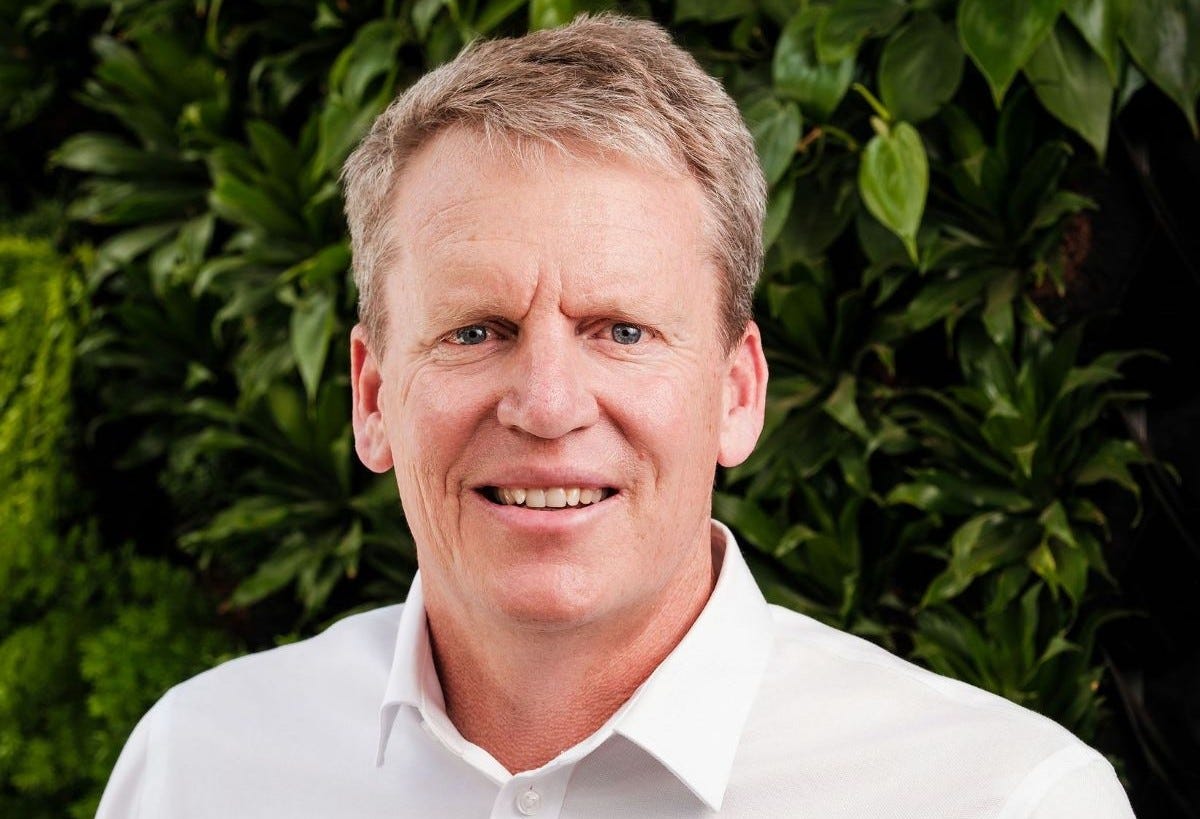
“We would be reluctant to invest in a domestic company if our view on the macro was dreadful,” Vintcent (pictured above) says. “But the reality is that our view on the macro has not been dreadful. The economy is not growing as fast as we’d want, but we think that things are chugging along.
“On the other hand, even if Absa is on a 5x P/E and we think it’s worth an 8x P/E, but the macro outlook is awful, we would be cautious of the investment case.”
Morris adds that this feeds into the weighting they are willing to assign to the stock.
“If you don’t understand what the risks are of each and every underlying asset in a portfolio, then you expose investors to risks that you aren’t able to manage”
“Given the positive bottom-up fundamental view we have on Absa, it’s unlikely that even in a weak macro scenario we would have nothing. But we wouldn’t have the weighting we currently have,” he says. “The portfolio construction would be different in terms of the weightings. We would manage that risk through the weighting we give to the stock, rather than taking a binary view of having 0% or 9%.”
This reflects the way risk management is built into every position in the portfolio, and always assessed at an individual security level.
“It’s always best managed at an underlying asset level,” Morris reiterates. “If you don’t understand what the risks are of each and every underlying asset in a portfolio, then you expose investors to risks that you aren’t able to manage.”