

Value doesn’t unlock itself: Finding investment asymmetry
Patrice Moyal explains how VISIO works to find alpha in different places.

VISIO Fund Management believes that the advantage in being a boutique asset manager runs deeper than just being flexible and nimble in decision making.
What sets top boutiques apart, according to co-CIO Patrice Moyal, is how engaged every member of the team is in what they are contributing to the business.
“The advantage of a small firm is that every team member is considered important,” Moyal says. “They are depended upon and know they are depended upon.
“I don’t think you get that in a big organisation. We’ve had some people join us from larger firms who have been looking at the same five companies in the same sector for two years. We encourage everyone to look at everything.”
“To keep a team highly engaged you have to look offshore.”
VISIO’s global focus is an important element in enabling this.
“There are only 60 or 70 companies you can invest in in South Africa, so there isn’t a lot for people to get stuck into here,” Moyal says. “To keep a team highly engaged you have to look offshore.”
The firm’s approach is explicitly not to treat domestic and international equities as separate asset classes but as a single opportunity set. This encourages analysts to think more broadly and explore ideas wherever they present themselves.
“For example, we invested in Japan three years ago and sold out about two years later,” Moyal says.
“We started seeing press announcements from firms taking more shareholder-friendly approaches, and activist investors taking positions. We picked 10 stocks – mostly mid-caps – and put half a percent in each. Seven of those companies performed and gave us good dollar-adjusted returns.”
Asymmetry
This is the kind of opportunity that VISIO seeks out – where they identify the potential for asymmetric returns.
“In Japan, we picked 10 stocks trading at deep discounts that were likely to be subject to self-initiated activism by the board or where someone was going to come along, shake the establishment and cause value unlocks,” Moyal said. “There was limited downside risk, but high potential upside.”
However, VISIO doesn’t limit itself to “value” opportunities. Elsewhere in global markets, Moyal sees similar kinds of asymmetric return profiles in structural growth opportunities.
While there is downside, the upside is substantially greater, particularly in technology.
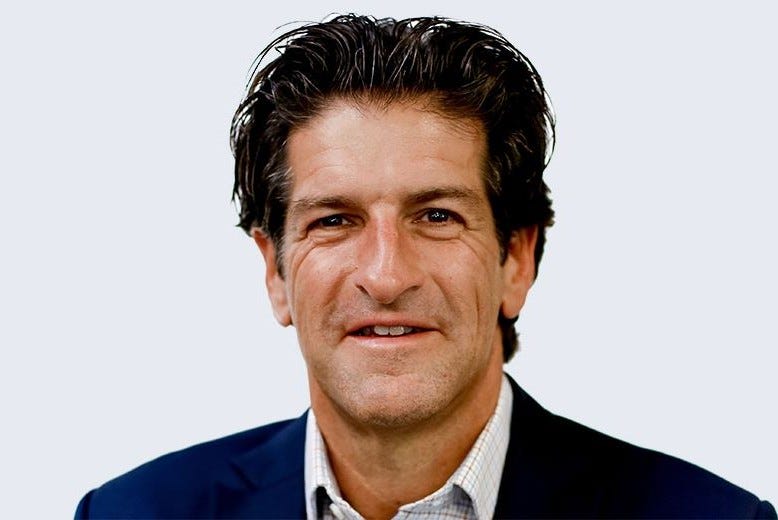
“People talk about these companies trading on high valuations, but you have to understand the potential growth,” Moyal (pictured above) says. “People were worried about valuation when Google bought YouTube for $1 billion or Facebook bought WhatsApp for $19 billion.
“But that wasn’t just excitement. That was long-term thinking.”
Having this broad opportunity set is particularly beneficial in the way VISIO manages the Curate Momentum Balanced Fund, which has grown rapidly to over R2 billion in AUM in under two years.
“We don’t silo team members.”
“We’re able to be flexible in our approach on the equity side, taking ideas both locally and globally,” Moyal says. “That’s how we think as a firm. We have been very global from day one.
“We don’t silo team members. Everyone is encouraged to explore new opportunities, and everyone is expected to contribute at all levels. We often test the water with small positions initially, and as conviction levels grow through more work, so would the investment.”
While the global ideas that VISIO identifies are varied, its local stock picking tends to be more focused on unlocking value from within.
Unlocking value
“For example, we hadn’t been invested in Old Mutual for about 10 years, but made a material investment last year,” Moyal says. “We did a deep dive on the company at the time when Jurie Strydom took over as CEO.
“We felt that it was so cheap that there was a significant margin of error, yet it offered tremendous value that could be unlocked. So, we wrote a detailed letter to the chairman and the board to gauge their willingness to acknowledge the potential value from within and their willingness to unlock it.”
This kind of activism has long been a feature of VISIO’s approach to generating returns.
“If the willingness is there at board level, we don’t mind being patient,” Moyal says. “Once a board comes out publicly to indicate that they are engaging with shareholders and considering changes, sellers stop selling.
“In the case of Old Mutual, we got a response from the chairman recognising a number of concerns and saying they are supporting Jurie in his new role to make Old Mutual great again. That reaffirmed our view that the risk is low and there could be a lot of upside.”
“Investors are leaving money on the table.”
There are even rare situations where writing a letter to a board can have an almost immediate impact. This was the case when Northam Platinum was considering using its cash-rich balance sheet to buy Royal Bafokeng Platinum. VISIO was one of a number of shareholders that objected through a formal approach to the Northam board.
“We didn’t want it to happen, so we wrote a letter to the board and also approached the press,” Moyal says. “There was a short timeframe in which to object, and within that period the board elected to cancel the deal.
“It wasn’t just because of us. But when you do that, it gives the board a different perspective. They are hearing views directly and formally from investors, which doesn’t generally happen.
“There is tremendous apathy from shareholders in South Africa and many questionable boards, which means investors are leaving money on the table,” Moyal adds. “If you can engage, there’s value that can be unlocked for all stakeholders.”